







Wall light above a sink or a worktop
 By the Alméa team
8 min read
Sommaire
A wall light above a sink or a worktop must light your hands without shadows, withstand splashes and steam, and never dazzle you when you look up. Kitchen or utility room, here are the heights, IP ratings and light settings for a truly practical wall light.
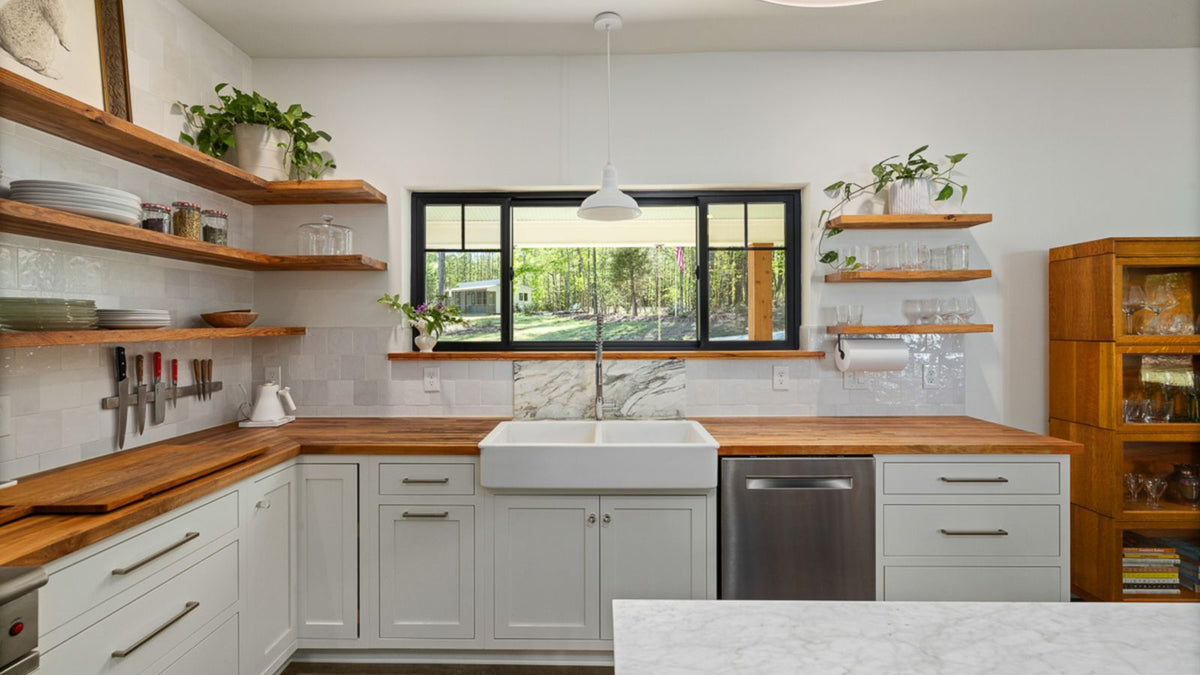
The sink is often the worst lit spot in the kitchen: placed under a window or in a corner, it gets the light from the ceiling light from behind. You end up washing, peeling or rinsing in your own shadow. A wall light fitted just above solves the problem, as long as it is chosen for a damp environment and placed at the right height.
For the general method of lighting a worktop along its full length, see our guide to lighting a worktop with wall lights. Here, we cover the specific points: the sink, humidity, glare and the utility room.
Contents
1. Why a wall light above the sink
A central ceiling light lights the kitchen, not the worktop: as soon as you lean over the sink, your head and shoulders block the light. A wall light fixed in front of you, above the work area, lights your hands, the inside of the sink and the worktop from the front, with no cast shadow.
It is also a welcome ambient light in the evening: switched on alone, it lights the kitchen just enough to tidy up or get a glass of water. It fits naturally into a layered kitchen lighting plan.
2. The fitting height above the worktop
A worktop is generally 90 cm from the floor. The right height for the wall light depends mainly on what is above it: wall units, a window or a bare wall.

| Layout | Recommended height for the bottom of the wall light | Above the worktop |
|---|---|---|
| Bare wall, no wall units | 1.50 to 1.65 m from the floor | 60 to 75 cm |
| Sink under a window | Above the window or on each side | Depending on the height of the opening |
| Open shelf above | Under the shelf, 5 to 10 cm lower | 45 to 55 cm |
| Utility room, laundry sink | 1.60 to 1.80 m from the floor | 70 to 90 cm |
Less than 55 cm above the worktop, the wall light gets in the way and catches splashes; more than 80 cm above, it lights from too far away and falls back into the same flaw as the ceiling light.
3. Sink under a window: two solutions
With no wall above the sink, two solutions work: a wall light above the window, head pointing down with a good projection, or two wall lights on each side of the window, at around 1.60 m, angled towards the centre.
Watch out for reflections: at night, the glass becomes a mirror. A visible source is reflected in the window right in front of your eyes. Choose downward light with a concealed source, and test the reflection one evening before fixing. An adjustable wall light makes this much easier.
4. Humidity and IP rating above the sink
Unlike the bathroom, the wiring regulations do not define zones around a kitchen sink. The environment is still damp, though: splashes from the tap, steam from hot washing-up, wiping down with a sponge. A suitable protection rating noticeably extends the life of the wall light.
| Position | Recommended rating | Why |
|---|---|---|
| Worktop away from the sink | IP20 acceptable | Few splashes |
| Above the sink | IP44 recommended | Splashes and steam |
| Above the hob | Avoid | Heat, grease, steam: the cooker hood provides light |
| Utility room, laundry sink | IP44 minimum | Ambient humidity, laundry |
Everything is explained in our article on IP ratings and in our guide lights and humidity.
LED wall lights to light the worktop with a crisp, warm light.
Discover our wall lights5. Not being dazzled when you look up
Standing at the sink, your eyes are between 1.50 and 1.70 m from the floor, exactly at the height of the wall light. A bare source or an overly bright diffuser dazzles you every time you look up. It is the most common flaw in kitchen wall lights.
- Choose downward light: shade, adjustable head, reflector.
- The source should not be visible from your working position, either directly or as a reflection in the window.
- Avoid clear globes and bare decorative bulbs above the sink.
To understand why badly directed light is tiring, read our article on glare and the UGR index.
6. Lumens, kelvins and colour rendering
The worktop is an area for precise tasks: cutting, peeling, checking how something is cooking or whether a glass is clean. Aim for an illuminance of 300 to 500 lux on the worktop, more than in the rest of the kitchen. The calculations are detailed in how many lumens per room.

| Criterion | Guideline |
|---|---|
| Output above the sink | 500 to 900 lumens |
| Output per metre of worktop | 600 to 1,000 lumens |
| Colour temperature | 3000 K, up to 4000 K in a utility room |
| Colour rendering | CRI 90 or more |
A good CRI lets you judge the colour of meat or the ripeness of fruit; see CRI explained. 3000 K keeps a kitchen warm, while 4000 K is better suited to a utility room or a pantry.
7. Width and number of wall lights
Above a single 60 to 80 cm sink, one wall light centred on the tap is enough. For a double sink or a worktop over 1.20 m, plan two wall lights 60 to 90 cm apart, or a long LED bar wall light covering about two thirds of the length. In a small kitchen, one well placed wall light is better than three badly angled spotlights.
Our guide to the kitchen wall light completes these guidelines for the rest of the room.

8. Materials and care near the sink
Near the sink, the wall light gets drops of water, steam and sometimes fine splashes of grease. Smooth, washable finishes clean with a wipe of a sponge: lacquered metal, glass, glazed ceramic. Porous materials need more attention.
A natural stone wall light can have its place in a kitchen, but rather away from the sink and the hob, where it will get neither water nor grease. Travertine is a porous stone; our article on the porosity of travertine and our guide to cleaning a stone light explain how to protect it.
9. The utility room
In a utility room, the wall light above the laundry sink or folding surface works in constant humidity: drying laundry, steam from the tumble dryer, hand washing. Aim for IP44 at least, a more neutral light around 4000 K to tell stains and colours apart, and a generous output. All the advice is in our guide to the utility room wall light.

10. Switching and electrical safety
The sink wall light is best on its own switch, placed at the kitchen entrance or at the end of the worktop, never above the sink or next to the tap. All the heights are in switches and sockets near a wall light. On a tiled splashback, drill with a suitable bit and no hammer action; see how to fix a wall light to tiles.
Clean lines and easy-living materials for a bright kitchen.
See the modern and design collection11. In short
A wall light above a sink or worktop is fitted 60 to 75 cm above the worktop, or 1.50 to 1.65 m from the floor. Aim for IP44 above the sink, downward light so you are never dazzled, 500 to 900 lumens at 3000 K with a CRI of 90. Avoid the hob, think about the reflection in the window, and keep porous materials away from splashes.
Frequently asked questions
At what height should a wall light go above a sink?
The bottom of the wall light goes 60 to 75 cm above the worktop, or about 1.50 to 1.65 m from the floor for a standard worktop at 90 cm.
Which IP rating for a wall light above a sink?
No zones are set around a kitchen sink, but IP44 is recommended to withstand splashes and steam. In a utility room, aim for IP44 at least.
How do you light a sink under a window?
Fit a wall light above the window, head pointing down, or two wall lights on each side of the opening. Check in the evening that the source is not reflected in the glass.
How many lumens above a sink?
Between 500 and 900 lumens for a single sink. For a whole worktop, allow 600 to 1,000 lumens per metre.
Which colour of light for a worktop?
3000 K keeps a kitchen warm while staying precise. In a utility room or pantry, a more neutral 4000 K helps you tell colours and stains apart.
Can you put a wall light above the hob?
It is best avoided: heat, grease and steam damage it quickly. The cooker hood lights the cooking area.
How do you avoid glare from a kitchen wall light?
Choose downward light, with the source hidden by a shade or reflector, and check that it cannot be seen from your working position with your head raised.
Is a stone wall light suitable for a kitchen?
Yes, away from the sink and the hob, where it gets neither water nor grease. Natural stone is porous and should be cleaned with care.
Our lights for your home
Stone, wood, metal, rattan: real materials. Free delivery across the UK, returns within 90 days.
 -36 %
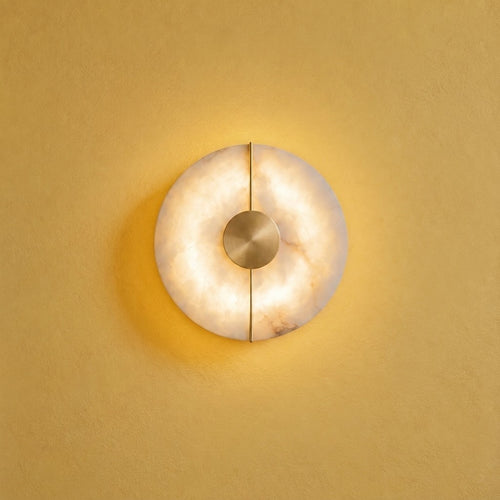
Marble wall light for bedroom, natural stone, alabaster white
£110.00
 -38 %
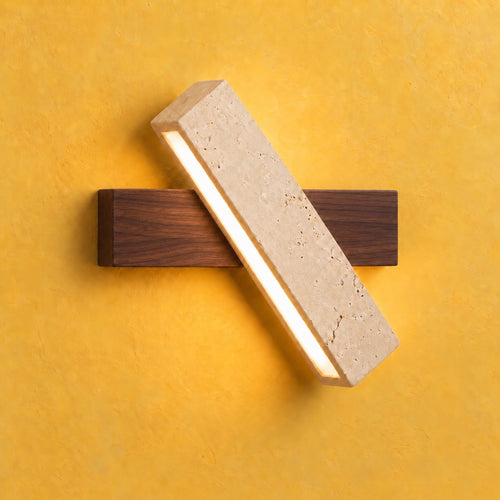
Natural stone wall light for living room, ambient lighting
£101.00
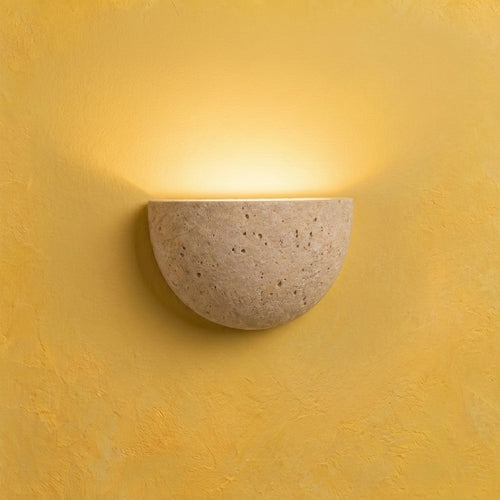 -42 %
Travertine wall light for bedroom, natural stone, retro
£129.00
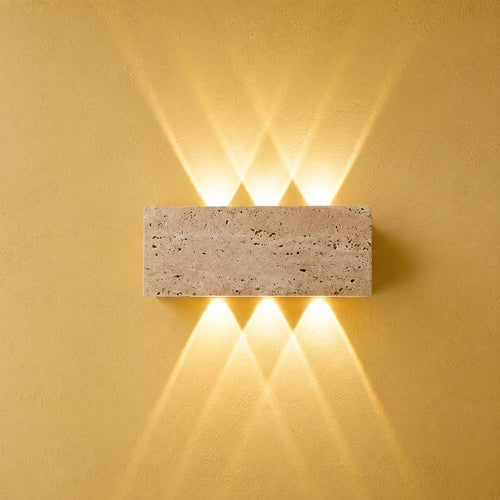 -38 %
Travertine wall light for living room, natural stone, wabi-sabi
From £101.00
 Wall lights
 Wall lights
 Pendant lights