






On a budget: 15 tips for beautiful lighting without changing everything
 By the Alméa team
7 min read
Sommaire
Beautiful lighting on a budget is possible without rewiring or replacing every light. Here are 15 practical tips, from the simplest to the most ambitious, to transform the atmosphere of your home while spending little.
Light is one of the most cost-effective decorating tools: a better chosen bulb or a lamp moved to a new spot changes a room more than a new cushion. The secret is not to buy a lot, but to buy in the right place.
Start with the free tips, then move on to the small purchases. You will keep your budget for the one light that will really make the difference.
Contents
- Change the bulbs first
- Think in lumens
- Move what you already have
- Light the corners
- A plug-in wall lamp
- Dress up a bare lampholder
- A new shade on an old base
- Double the light with a mirror
- Pale textiles and walls
- Light a shelf
- Dimmable bulbs
- Schedule without building work
- Clean lights and bulbs
- One strong light
- Prioritise living spaces
- In short
- Frequently asked questions
1. Lighting on a budget: change the bulbs first
This is the most cost-effective tip. Replacing cool or tired bulbs with warm white LEDs, 2,700 K, instantly warms up a room. Use the same colour temperature throughout the room. Our guide to colour temperature will help you choose. For common fittings, our warm white E27 LED bulbs screw into most lamps and pendant lights.
2. Think in lumens, not watts
With LEDs, watts no longer tell you anything about brightness. Read the lumens on the packaging, and check the colour rendering index (CRI 80 at least).

| Old bulb | LED equivalent | Lumens |
|---|---|---|
| 25 W | about 3 W | 250 lm |
| 40 W | about 5 W | 470 lm |
| 60 W | about 8 W | 800 lm |
| 75 W | about 11 W | 1,050 lm |
| 100 W | about 14 W | 1,500 lm |
All the guidelines are in lumens, watts, kelvins: the complete decoder.
3. Move what you already have
Free and often spectacular: bring out the lamp hidden behind the sofa, move the reading lamp closer to the armchair, put a lamp on a console table near the entrance. The same source placed against a pale wall gives far more light than in the middle of a dark piece of furniture.
4. Light the corners
Corners in shadow make a room feel smaller. A second-hand floor lamp or a small low lamp on the floor in a corner is enough to push the walls back visually. See our advice on choosing and placing a floor lamp.
5. A plug-in wall lamp
No cable outlet in the wall? A plug-in wall light saves calling an electrician and chasing the wall. The cable hides in trunking painted the same colour as the wall. Everything is explained in our article on the plug-in wall lamp.
6. Dress up a bare lampholder
The lampholder that has been dangling from the ceiling since you moved in is the sign of makeshift lighting. Until you get a proper pendant, a decorative globe or filament bulb in warm white turns that bare flex into a deliberate feature. Our guide to decorative bulbs presents the shapes that work.
7. A new shade on an old base
An old-fashioned lamp base gets a second life with a linen, paper or natural fibre shade. Check the type of fitting (ring or harp) and the height: the shade should hide the lampholder without overwhelming the base.
8. Double the light with a mirror
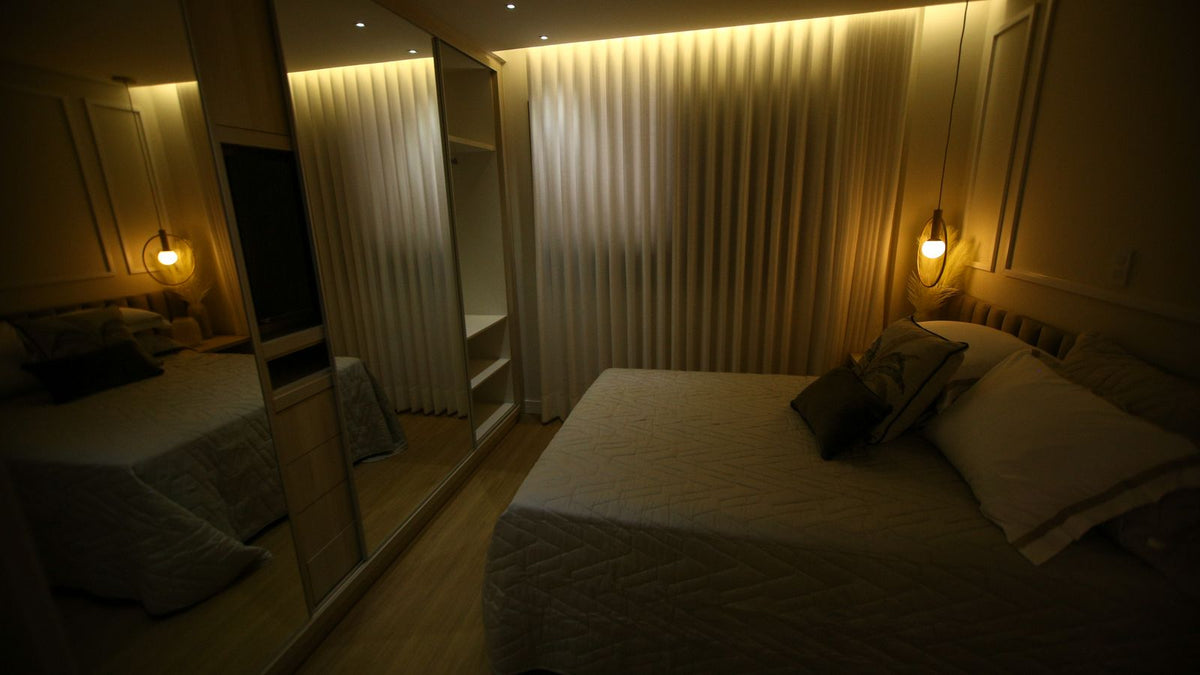
A mirror placed opposite or next to a light source reflects the light back into the room and creates depth. It is the classic trick for small spaces, described in detail in mirror and wall light: the duo that makes a room feel bigger.

9. Pale textiles and walls
A dark wall absorbs light, a pale wall reflects it. Without repainting the whole room, a pale throw, rug or curtains already increase the perceived brightness. If you repaint just one wall, choose the one that receives the light from your lamps. Our article getting the light right for the colour of your walls gives the guidelines.
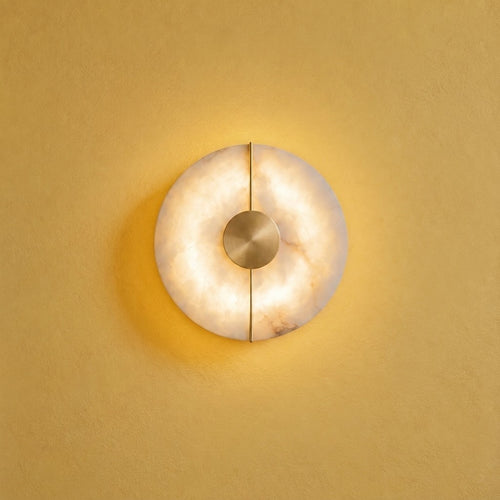
When the budget allows, a well chosen wall light becomes the centrepiece of the wall.
Discover our wall lights10. Light a shelf
A self-adhesive LED strip under a shelf or in a bookcase creates accent lighting for very little. Choose it in warm white with a diffuser profile to avoid the dotted light effect. More ideas in lighting a bookcase and shelves.

11. Dimmable bulbs
Being able to dim the light in the evening changes the atmosphere of a living room. Without installing a dimmer, some dimmable bulbs adjust when you press the switch several times, others with a small remote control. Check the label on the packaging with our article dimmable bulbs: how to tell.
12. Schedule without building work
A timer socket or smart plug switches on the living room lamp at dusk, without touching the wiring. Handy for coming home to a house that is already lit. See the options in scheduling your lighting.
13. Clean lights and bulbs
Dust on a bulb, shade or diffuser noticeably reduces the light given off. A wipe with a dry cloth, with the light off and cool, restores the sparkle for free. Our care guide by material explains what to do for rattan, fabric or stone.

14. Invest in one strong light
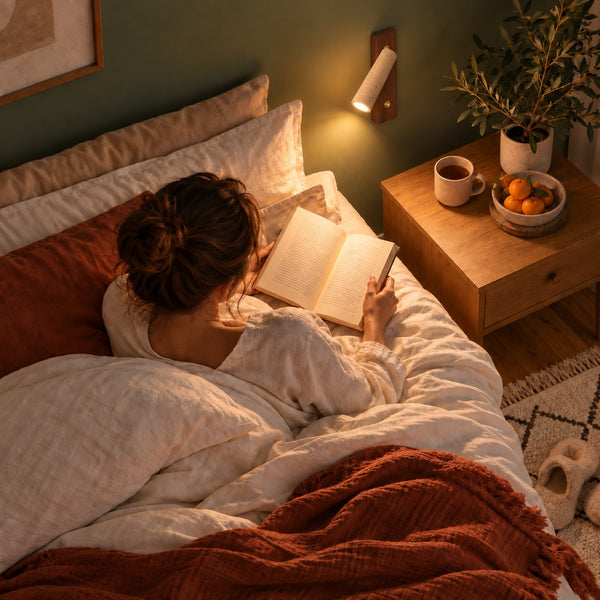
Rather than replacing five average lights, put your budget into a single piece that structures the room: a pendant above the table, or a pair of wall lights on either side of the bed. The rest can stay simple.
| Tip | Cost | Effect on the atmosphere |
|---|---|---|
| Move lamps, clean | Free | Medium to strong |
| Matching warm white bulbs | Low | Strong |
| LED strip, timer socket | Low | Medium |
| New shade, extra lamp | Moderate | Medium to strong |
| One well chosen main light | The biggest item | Very strong |
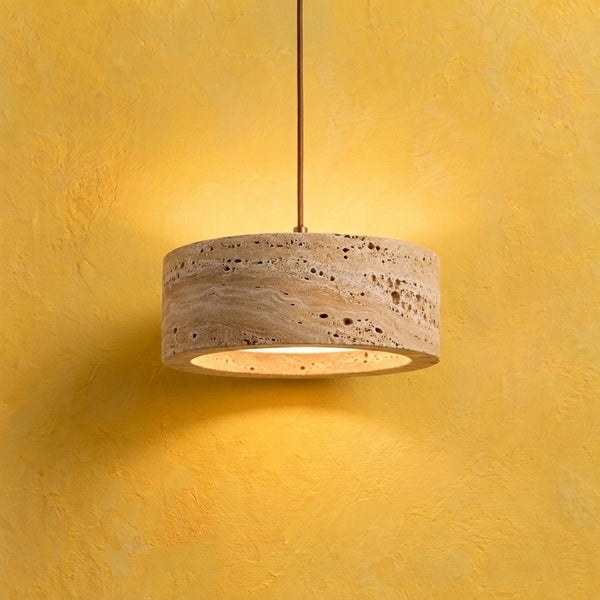
A single well chosen pendant light can be enough to give a whole room character.
See our pendant lights15. Prioritise the rooms you live in
Start with the living room and bedroom, where you spend your evenings, then the entrance, which gives the first impression. The bathroom and kitchen mainly need functional light, which is often already there.
| Room | Priority | First step |
|---|---|---|
| Living room | 1 | Add two low sources in warm white |
| Bedroom | 2 | Soft bedside light, ceiling light off in the evening |
| Entrance | 3 | A welcoming lamp or wall light |
| Kitchen | 4 | Light the worktop |
16. In short
For beautiful lighting on a budget, start with what is free (moving, cleaning), carry on with the bulbs, then add one or two accent sources. Keep most of your budget for one main light. If you are moving in, our article first flat: which lights to buy helps you decide the order of purchases.
Frequently asked questions
How can you get beautiful lighting without spending much?
Start with warm white LED bulbs throughout the room, then move your lamps towards the walls and corners. Add an accent source if needed. These three steps are often enough to transform the atmosphere.
Which bulb for a warm atmosphere?
A 2,700 K LED with a CRI of at least 80. For a medium-sized living room, spread 1,500 to 2,500 lumens over several sources rather than one powerful bulb.
How can you light a room without a ceiling light on a budget?
Use a floor lamp aimed at the ceiling, a table lamp and a plug-in wall lamp. Three sources at different heights light better than a single ceiling light.
Do LEDs really use less electricity?
Yes: an LED of about 8 W produces the same light as an old 60 W bulb. It also lasts much longer, which reduces the number of replacements.
How can you make a ceiling light less gloomy?
Switch to a warm white bulb, add a shade or diffuser that hides the source, and use it less in the evening in favour of lower lamps. A dimmer also helps to soften the light.
How do you hide the cable of a wall lamp?
With self-adhesive trunking painted the colour of the wall, or by running the cable down a corner or along a piece of furniture. A coloured fabric cable can also be shown off as a decorative feature.
Do you need to change all your lights to update a room?
No. A single well chosen main light, combined with matching bulbs and one or two extra lamps, already updates the whole room noticeably. The rest can evolve gradually.
How many lamps does a living room need?
At least three sources at different heights: one high, one at mid-height and one low. In a large living room, four to six points spread around give a more even, softer light.
Our lights for your home
Stone, wood, metal, rattan: real materials. Free delivery across the UK, returns within 90 days.
 -36 %
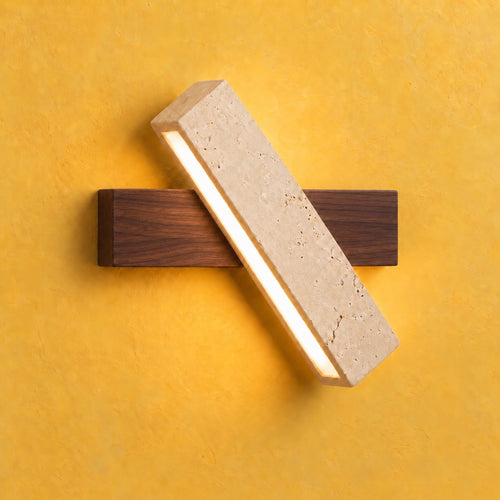
Marble wall light for bedroom, natural stone, alabaster white
£110.00
 -38 %
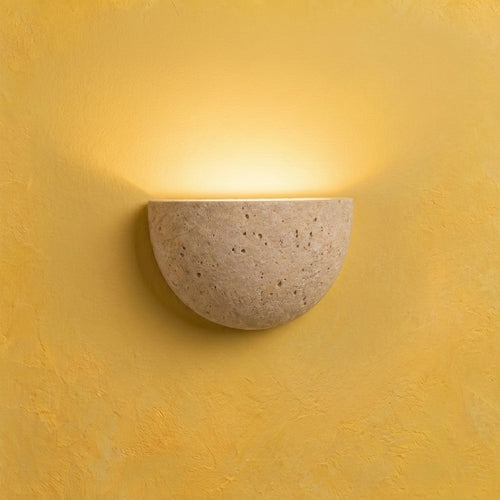
Natural stone wall light for living room, ambient lighting
£101.00
 -42 %
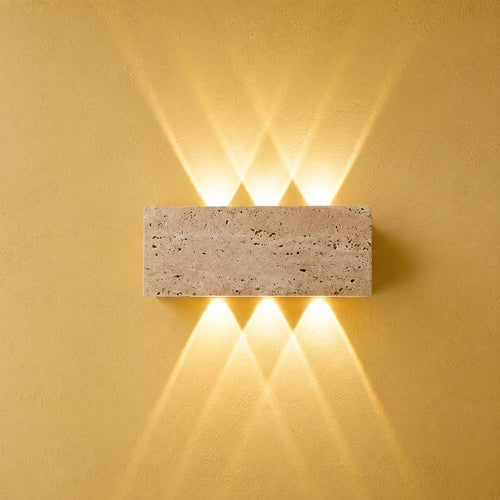
Travertine wall light for bedroom, natural stone, retro
£129.00
 -38 %
Travertine wall light for living room, natural stone, wabi-sabi
From £101.00
 Room by room
 Inspiration
 Materials