






Brass, copper, bronze, black steel, aluminium: lighting metals compared
 By the Alméa team
7 min read
Sommaire
Brass, copper, bronze, black steel or aluminium: this comparison of lighting metals shows you what each metal changes in terms of light, weight, patina and care. Everything you need to choose a metal wall light or pendant light that will age the way you want.
Metal is everywhere in lighting: shade, arm, ceiling rose, cage, LED heat sink. But polished brass, patinated copper and black powder-coated steel have nothing in common, neither in the atmosphere they create nor in the way they change over time. Here are the guidelines to find your way, with a big comparison table.
Contents
- Solid metal or just a finish
- The big metal comparison table
- Brass: golden shine
- Copper: warmth and patina
- Bronze: depth and weight
- Black steel: the graphic choice
- Aluminium: light and technical
- Polished, brushed, aged, matt: the finishes
- Which metal for which room?
- In short
- Frequently asked questions
1. Lighting metals: solid or just a finish?
Before comparing, a useful point: “brass finish”, “copper finish” or “bronze finish” often refers to a colour applied to another metal, steel or aluminium, by lacquering or surface treatment. The look is similar, the behaviour over time is not: a finish does not develop a patina, a solid metal does.
A simple test settles the question on a piece you have in your hand: the magnet. It sticks to ordinary steel, but not to brass, copper, bronze or aluminium. A “brass” that attracts the magnet is therefore gold-coloured steel. For golden tones in particular, our guide gold wall light, brass or copper covers this point further.
2. The big lighting metal comparison table

| Criterion | Brass | Copper | Bronze | Black steel | Aluminium |
|---|---|---|---|---|---|
| Composition | Copper and zinc | Pure metal | Copper and tin | Iron and carbon, lacquered | Pure metal or alloy |
| Natural colour | Golden yellow | Orange red | Deep golden brown | Black (paint) | Silver grey |
| Weight | Heavy | Heavy | Very heavy | Heavy | Light, about a third of the weight of steel |
| Ageing | Tarnishes, browns | Browns, then turns green | Brown or green patina | Rusts if the lacquer is scratched | Stable, does not rust |
| Humidity | Speeds up the patina | Verdigris possible | Good resistance | Needs protecting | Good resistance |
| Magnetic | No | No | No | Yes | No |
| Styles | Art deco, chic classic | Country, warm industrial | Classic, heritage | Industrial, minimalist | Modern, design |
| Typical use | Arms, ceiling roses, shades | Kitchen pendants | Cast parts | Cages, frames, chandeliers | Integrated LEDs, outdoors |
3. Brass: the golden shine that warms
An alloy of copper and zinc, brass offers that golden yellow that instantly warms a room. Polished, it reflects bright light; brushed, it softens reflections; aged, it takes on a more discreet amber tone. Left bare, it gradually tarnishes and browns, which some people actively look for. Lacquered, it keeps its shine longer.
It pairs remarkably well with pale stone, as our article combining stone and brass shows. For a pendant, see the guide to the brass pendant light.
4. Copper: warmth and a living patina
Copper is a pure, orange-red metal that changes quickly: it browns in contact with air, then can turn green in a humid environment. This patina is part of its charm in a country kitchen or a warm industrial interior. The inside of a copper shade tints the light with a warm glow, very flattering above a table.
It also comes as a finish only, like our Nordic country style wall light, copper finish. Everything about this metal is in our guide to the copper pendant light.
5. Bronze: depth, weight and heritage
An alloy of copper and tin, bronze is cast in a foundry. It produces solid, heavy pieces in a deep golden brown, often deliberately patinated. It is found mainly on classic or antique lights. In contemporary lighting, the word “bronze” usually means a colour applied to another metal: check the description.
Its weight calls for careful fixing. For antique finds, our guide to the vintage pendant light and chandelier gives the points to check before buying.
6. Black steel: graphic and industrial
Steel is an alloy of iron and carbon, almost always lacquered or powder-coated in matt black for lighting. Strong and economical to work, it makes geometric cages, slim arms and the multi-head chandeliers of industrial style possible. Its only weakness: a deep scratch in the lacquer, in a humid environment, lets rust appear.

Matt black emphasises a line and frames the light. It also goes well with stone, as with the stone and black metal wall light. The full style is described in industrial style, black metal and exposed bulbs.
Geometric cages, three-head chandeliers, barn shades: explore our metal lights.
Discover our metal and industrial lights
7. Aluminium: light, stable and technical
Aluminium weighs about a third as much as steel and does not rust: a thin oxide layer protects it naturally. It conducts heat very well, which makes it the go-to metal for dissipating heat from integrated LEDs. It comes raw, anodised or lacquered in black, white or gold.
Being light, it makes large wall lights and long pendants easier to fit. Being stable, it suits outdoor use and coastal areas. Our guide to the metal chandelier and ceiling light also compares wrought iron.
8. Polished, brushed, aged, matt: finishes and their care
| Finish | Look | Fingerprints | Care |
|---|---|---|---|
| Polished | Mirror-like, bright reflections | Very visible | Frequent microfibre cloth |
| Brushed | Satin, soft reflections | Barely visible | Cloth in the direction of the brushing |
| Aged or patinated | Matt, nuanced | Invisible | Dusting only, no polish |
| Matt lacquered | Even, graphic | Barely visible | Damp cloth, no abrasives |
| Anodised | Satin metallic | Barely visible | Soft cloth, no solvents |
Golden rule: never use an abrasive sponge, and no polish on an intentional patina or an applied finish. The method for each material is in our guide to caring for your lights.
9. Which metal for which room?

| Room | Recommended metal | Why |
|---|---|---|
| Living room | Brass, black steel | Warmth or graphic lines depending on style |
| Kitchen | Copper, black steel | Warm glow on the table, washable |
| Bedroom | Brushed brass, aluminium | Soft reflections, light wall lights |
| Bathroom | Aluminium, stainless steel | Withstands humidity, with the required IP rating |
| Outdoors | Lacquered aluminium | Does not rust, light to fix |
For outside walls, our article outdoor wall lights: finishes and colours details the choice of black, anthracite or rust.
A metal wall light, in black, gold or copper, to give structure to a wall? See our selection.
See our metal wall lights10. In short
Brass brings golden shine, copper warmth and patina, bronze the depth of solid pieces, black steel the graphic line, aluminium lightness and stability. Always check whether it is solid metal or a finish, then choose according to the room, the humidity and the patina you are happy to live with.
Frequently asked questions
What is the difference between brass and bronze?
Brass is an alloy of copper and zinc, golden yellow. Bronze combines copper and tin, with a deeper brown tone and greater weight. Brass is more common in contemporary lighting.
How can you tell if a light is real brass?
Hold a magnet to it: it does not stick to solid brass. If it sticks, it is steel with a gold finish. A discreet scratch also reveals the colour of the metal beneath the surface.
Does copper turn green?
Yes, in a humid environment copper can develop verdigris after browning. Indoors in dry conditions, it simply darkens slowly. A lacquer slows this process down.
Does black steel rust?
Lacquered steel does not rust as long as the lacquer is intact. A deep scratch in a humid environment can let rust appear: touch it up quickly with a suitable lacquer.
Which metal for an outdoor wall light?
Lacquered aluminium is the safest choice: it is light and does not rust. Stainless steel also works. Above all, check the IP rating suited to the exposure.
Why are integrated LEDs often made of aluminium?
Because aluminium dissipates heat very well. An LED that stays cool keeps its light output and lifespan for longer.
How do you clean a brass light?
With the light off and cool, wipe it with a dry microfibre cloth. To revive bare brass, a dedicated brass cleaner is enough; never use it on lacquered or deliberately aged brass.
Can you mix several metals in one room?
Yes, as long as you stick to two metals, one dominant and one as an accent. Matt black goes with all of them; brass and copper together need an interior that is already very warm.
Our lights for your home
Stone, wood, metal, rattan: real materials. Free delivery across the UK, returns within 90 days.
 -36 %
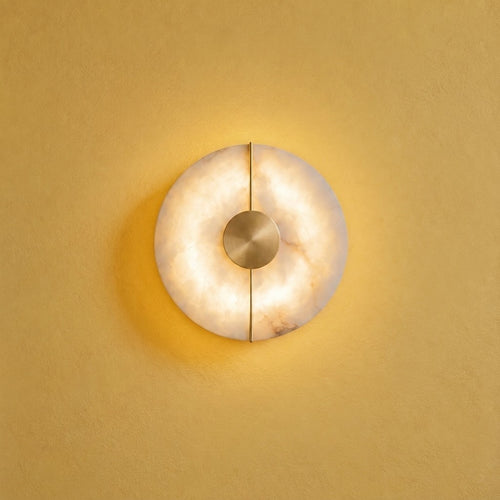
Marble wall light for bedroom, natural stone, alabaster white
£110.00
 -38 %
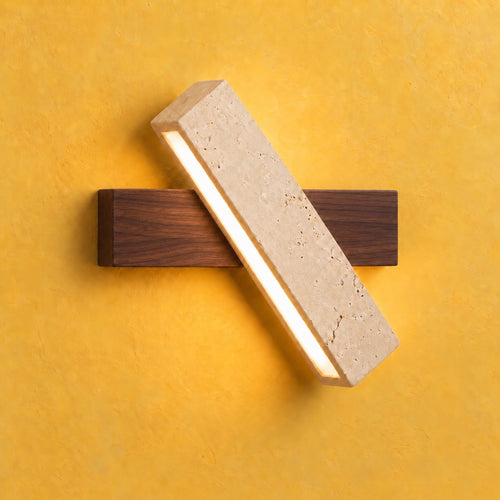
Natural stone wall light for living room, ambient lighting
£101.00
 -42 %
Travertine wall light for bedroom, natural stone, retro
£129.00
 -38 %
Travertine wall light for living room, natural stone, wabi-sabi
From £101.00
 Materials
 Wall lights
 Guide pratique