






Preventing fire risk from lighting at home
 By the Alméa team
7 min read
Sommaire
Preventing fire risk from lighting at home comes down to a few simple steps: suitable bulbs, multi-socket adaptors used properly, fairy lights in good condition, old lights checked over and a smoke alarm that works. Nothing complicated, plenty of common sense, and a more peaceful home.
Modern lighting is very safe. LEDs give off little heat, standards are demanding and recent consumer units protect circuits well. Incidents almost always come from use that strays from what was intended: a bulb that is too powerful, an overloaded extension lead, an old worn cable.
This guide goes through the common situations and the right reflexes, room by room and object by object.
Contents
1. Fire risk and lighting: where the danger comes from
A fire started by lighting almost always has one of three causes: a source that is too hot in contact with a material that burns, a connection that heats up because it is loose or worn, or an overloaded circuit. Each one is easy to prevent.
| Cause | Common example | Prevention |
|---|---|---|
| Source too hot | Halogen near a curtain | Switch to LED, keep fabrics away |
| Faulty connection | Cracked lampholder, loose wire | Replace the part, tighten the terminals |
| Overload | Adaptors plugged into each other | One adaptor per wall socket |
| Damaged cable | Extension lead crushed under furniture | Replace it, never patch it up |
2. Bulbs: LED first
Switching to LED is the most effective step. For the same light, an LED uses far less power and gets far less hot than an incandescent or halogen bulb. It stays lukewarm to the touch, whereas a halogen becomes scorching within minutes. Also check that the actual wattage of the bulb respects the maximum wattage shown on the light. Our lumens, watts and kelvins decoder helps you choose the equivalent.

Take the opportunity to check the lampholders when changing a bulb: a blackened or cracked lampholder should be replaced before you screw in the new bulb.
3. Halogen and old floor lamps
Halogen uplighters with a bowl pointing at the ceiling, common in the 1990s, used 300 to 500 W tubes. Their surface reaches very high temperatures. A curtain brushing the bowl, a piece of clothing draped over it, a sheet of paper falling onto it: that is exactly the scenario to avoid. If you still have one, replace the tube with a compatible LED tube or, better still, replace the whole floor lamp.
4. Multi-socket adaptors and extension leads: the right reflexes
A multi-socket adaptor can handle a maximum total load, which is marked on it. Beyond that, it heats up. Lamps use little power, but they often share the adaptor with a portable heater, a kettle or a hairdryer.
| Do | Avoid |
|---|---|
| Only one adaptor per wall socket | Plugging adaptors into each other |
| Fully unwind a cable reel | Using a wound-up reel under heavy load |
| Choose a model with a switch and protection | Keeping an adaptor whose casing has melted or blackened |
| Leave the adaptor in the open air | Hiding it under a rug or cushion |
To get rid of extension leads behind furniture, think about creating a new light point on the wall.
5. Fairy lights
Fairy lights often come out once a year, are stored in a tangle and plugged in without a second thought. A few steps are enough:
- inspect the cable and the bulbs before each season, and throw away any damaged set;
- stick to the intended use: indoor fairy lights do not go outside;
- keep them away from curtains and paper decorations if they get warm;
- switch them off at night and when you are out, a timer does it for you.
LED wall lights fixed to the wall, for warm light without extension leads.
Discover our wall lights6. Old lights
A second-hand chandelier or a family lamp has charm, but its wiring is often several decades old. Cracking rubber, fraying fabric insulation, a split Bakelite lampholder: these parts wear out. Have the light checked or rewired before plugging it back in. If you tackle it yourself, follow the 8 electrical safety reflexes.

7. Lampshades and combustible materials
Paper, fabric, rattan and wood are beautiful materials for light, provided you use an LED centred in the shade, not touching it, and respect the maximum wattage. Also keep a distance between lamps and curtains, bedding or shelves full of books.
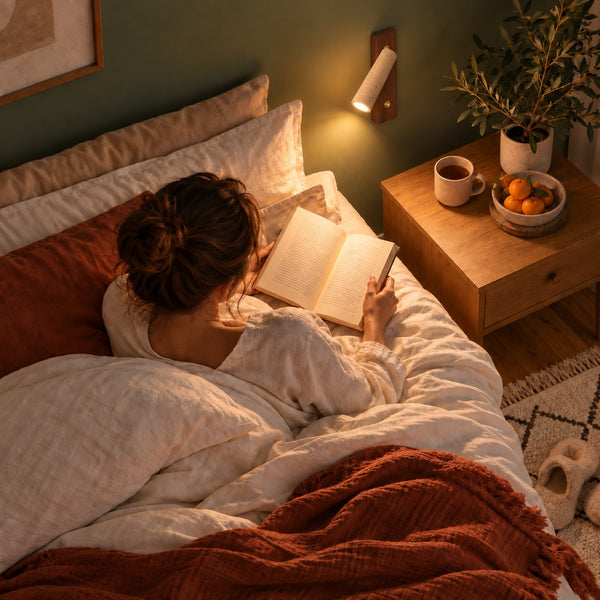
Bedside lamps deserve particular attention: a pushed-back duvet, a throw or a piece of clothing tossed onto the shade is enough to smother a hot bulb. A wall light fixed above the bed removes this risk while freeing up the bedside table. It is also the simplest solution in a child's bedroom, where table lamps often end up on the floor.

8. Cables, lampholders and connections
A loose connection heats up. That is why a flickering bulb, a crackling switch or a warm socket should be taken seriously. Our article what to do when a wall light flickers helps you find the cause, and wall light getting hot helps you tell normal from abnormal. Never trap a cable under a furniture leg or in a door.
9. The smoke alarm: an essential ally
In the UK, fitting at least one smoke alarm on every storey of your home is strongly recommended, and it is a legal requirement in rented homes. Choose a model that meets BS EN 14604. It is fixed to the ceiling, preferably in the hallway leading to the bedrooms, away from the kitchen and bathroom to avoid false alarms.

| Step | Recommended frequency |
|---|---|
| Press the test button | Regularly, as per the instructions |
| Dust the vents | A few times a year |
| Change the battery | At the low battery signal or as per the instructions |
| Replace the alarm | By the date given by the manufacturer |
10. The annual checklist
Once a year, for example when the fairy lights come out, take twenty minutes to:
- replace the last halogens with LEDs;
- check visible cables, lampholders and adaptors;
- move lamps away from curtains and laundry;
- test the smoke alarm.
If your installation is several decades old, our guide electrical renovation: where to start sets out the steps.
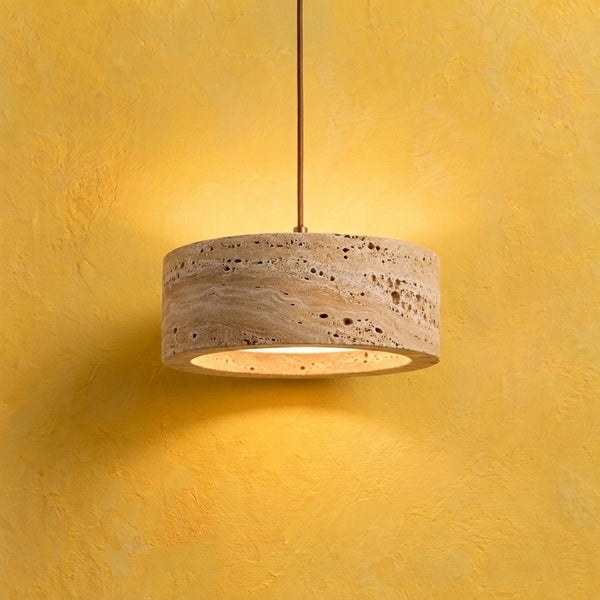
On the ceiling, an LED pendant lights the whole room without cluttering anything.
See our pendant lights11. In short
Preventing fire risk from lighting means switching to LED, respecting the maximum wattage of lights and adaptors, inspecting fairy lights and old lights, and keeping a smoke alarm in working order. For anything involving the consumer unit or circuits, see when to call an electrician.
Frequently asked questions
Can an LED bulb cause a fire?
It is very rare. An LED gives off little heat, but its electronics can overheat if it is enclosed in a light not designed for it or if it is poor quality. Choose bulbs with CE or UKCA marking that suit the light.
Can you leave a lamp on all night?
A wall light or LED night light in good condition, yes. However, avoid leaving fairy lights, halogen lamps or lamps near fabrics switched on.
How many multi-socket adaptors can you plug together?
None in a chain: only one adaptor per wall socket. Also respect the total load marked on the adaptor.
Are halogen uplighters dangerous?
Their high-wattage tubes get extremely hot. Kept away from any object, they work, but replacing them with an LED solution removes the risk.
Where should a smoke alarm go?
On the ceiling, in the hallway leading to the bedrooms, away from the kitchen and bathroom. In a house with several floors, one alarm per storey is good practice.
How do you know if a set of fairy lights is still safe?
Unwind it fully and inspect it: cable intact, no exposed wire, plug not misshapen. If in the slightest doubt, throw it away.
Can an old chandelier be dangerous?
Its wiring can be if it is worn. Have it checked or rewired before connecting it again, especially if the insulation is brittle.
Why is my socket or switch warm?
Often a loose connection or an overload. Switch off the circuit and have it checked by an electrician.
Our lights for your home
Stone, wood, metal, rattan: real materials. Free delivery across the UK, returns within 90 days.
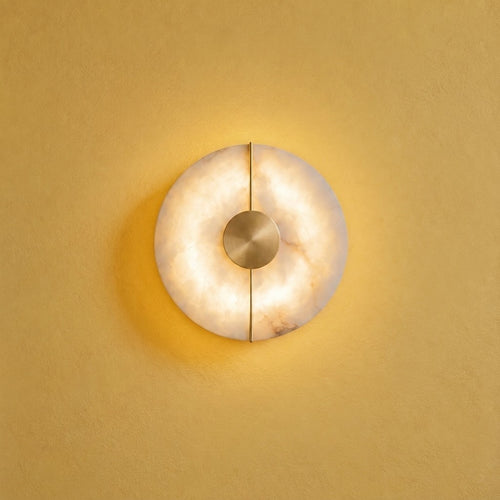 -36 %
Marble wall light for bedroom, natural stone, alabaster white
£110.00
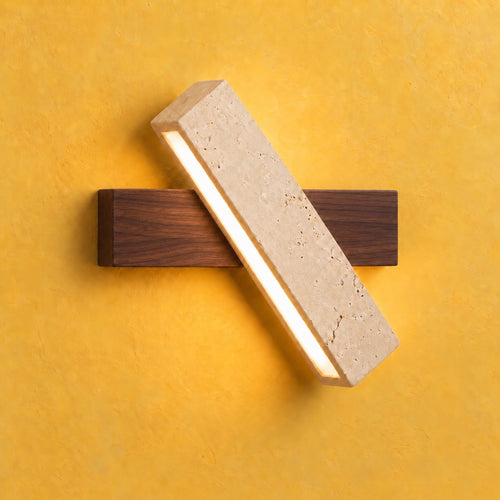 -38 %
Natural stone wall light for living room, ambient lighting
£101.00
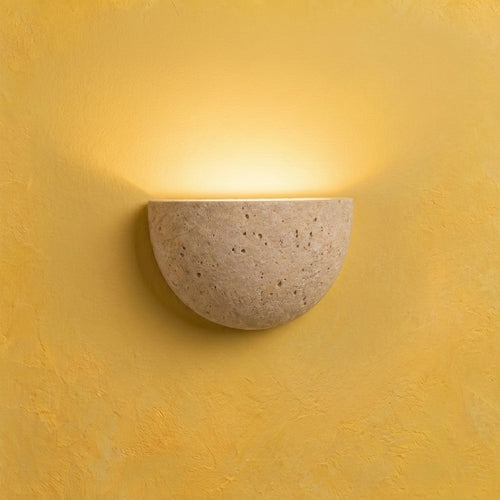 -42 %
Travertine wall light for bedroom, natural stone, retro
£129.00
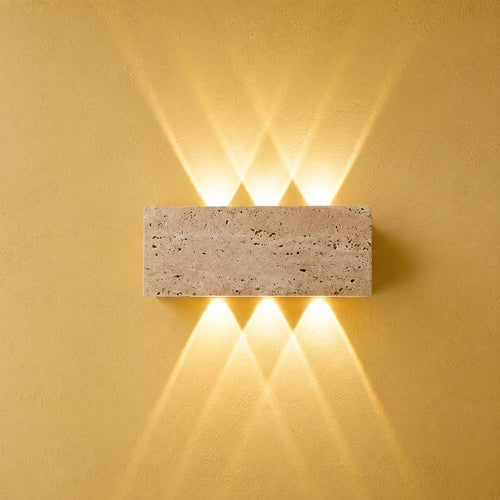 -38 %
Travertine wall light for living room, natural stone, wabi-sabi
From £101.00
 Guide pratique
 Guide pratique
 Guide pratique